Walking should feel steady, not like a repeated jolt through your knees, hips, ankles, or lower back. Many people search for how to reduce pressure on joints while walking after noticing soreness on stairs, sidewalks, or long shopping trips. The answer is rarely one perfect shoe or one magic exercise. Joint comfort usually depends on several small choices, including posture, stride length, walking speed, surface, footwear, and muscle strength.
Orthopedic surgeon Dr. Nicholas DiNubile often describes movement with the phrase, “Motion is lotion.” Gentle, regular movement can support joint mobility, but painful movement deserves attention. A shorter stride may reduce overreaching. A slightly slower pace can improve control. Cushioned, well-fitting shoes may also soften impact, especially on hard pavement. These changes sound simple. They are not always easy to maintain.
This guide shares seven practical ways to lower joint stress while walking. It focuses on realistic habits, such as warming up, choosing forgiving surfaces, improving leg strength, and checking walking form. It also recognizes an uncomfortable truth: the best approach may differ between two people with the same knee pain. Your weight, previous injuries, muscle control, and walking pattern all matter. I have found that people often change too many things at once, then cannot tell what helped. Try one adjustment at a time. Stop if pain becomes sharp, swelling increases, or your gait changes. A qualified physiotherapist or healthcare professional can assess persistent symptoms and provide safer, personalized guidance.
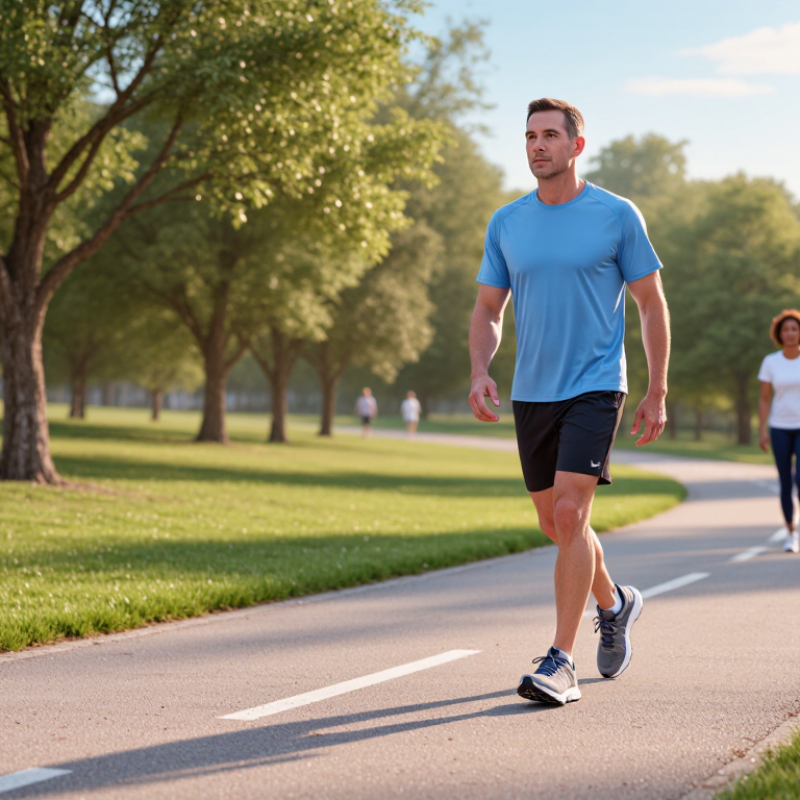
Walking is gentle, but it still creates repeated force through the ankles, knees, hips, and lower back. Biomechanics research often estimates knee loading at about 1.5 times body weight during level walking. Small changes can matter. The World Health Organization reported that 1.71 billion people live with musculoskeletal conditions worldwide in 2022. Joint discomfort is widespread, not imaginary.
Start with seven practical adjustments.
These habits reduce unnecessary impact and improve control around vulnerable joints.
The Centers for Disease Control and Prevention reports that about one in four American adults has doctor-diagnosed arthritis. That figure makes joint protection a daily concern.
Try this simple test: your foot should land quietly beneath your body, not far ahead. Keep your knees slightly soft. If pain lasts into the next day, your walking dose may be too high.
I used to assume more distance always meant better fitness. That idea needs correction. Consistency matters, but recovery matters too.
A physical therapist can assess gait, strength, footwear, and pain patterns when symptoms persist.
Supportive shoes can reduce joint stress by improving stability and cushioning each step. Choose a pair with a firm heel counter, a secure midfoot fit, and enough room for your toes. The sole should bend near the toes, not through the middle. Avoid worn soles, loose heels, and shoes that force your toes together. Replace them when the tread becomes uneven. Small details matter.
Walking surfaces also influence pressure on the knees, hips, and ankles. Smooth, level paths are usually easier than cracked pavement or steep slopes. A rubberized track may feel gentler than hard concrete. Packed dirt can work well if it is even and dry. Grass looks soft, but hidden holes can increase ankle strain. Watch each step.
Try new shoes on a short walk before using them for longer distances. Your heel should not slide, and your toes should not touch the front when walking downhill. A common mistake is choosing thick cushioning without checking stability. More cushioning is not always better. No shoe suits every foot, and comfort can be misleading at first. If joint pain persists, swelling appears, or your walking pattern changes, seek advice from a qualified healthcare professional. One useful adjustment may still be overlooked: reduce your pace and shorten your stride.
Reducing joint pressure begins with how you carry yourself. Keep your ears above your shoulders and your shoulders above your hips. Let your eyes face forward, not down at your feet. A relaxed rib cage helps prevent an exaggerated lower-back arch. Keep your arms loose and swing them gently from the shoulders. Not rigid.
Shorten your stride slightly, especially on hard surfaces or downhill paths. Your foot should land beneath, or close to, your hips rather than far ahead. This can reduce braking forces through the knees. Increase your cadence gradually if your steps feel heavy. A 2022 systematic review in Gait & Posture found that gait-retraining strategies can improve lower-limb loading, although results vary between individuals. Your comfortable rhythm matters more than copying someone else.
Walk with a quiet, controlled footfall. Avoid forcing a heel strike or pushing aggressively from the toes. Choose level ground when pain is active, and use handrails on steep sections. The World Health Organization’s 2020 Guidelines recommend 150–300 minutes of moderate activity weekly, but that target should not override joint symptoms. Begin with ten-minute walks and add time slowly. I still catch myself leaning forward when tired. That small mistake matters. If swelling, instability, or sharp pain persists, a qualified physiotherapist should assess your posture, stride, and walking technique. Ease off.
7 Best Tips to Reduce Pressure on Joints While Walking
Managing Walking Distance, Pace, and Daily Joint Load
Begin with a distance your joints tolerate comfortably. Add only a few minutes every several walks. Split one long outing into two shorter walks. This often reduces stiffness without sacrificing daily movement. Choose flatter routes when your knees, hips, or ankles feel sensitive. Uneven ground can increase sudden joint loading. I used to treat every walk as a fitness test. That was a mistake.
Keep your pace steady and conversational. Shorter steps may feel easier than reaching forward with each stride. Slow down before a hill, not after pain begins. Leave a little energy in reserve. A supportive walking surface can also make each step feel less jarring. Comfortable, well-fitting footwear matters, but it cannot correct every walking problem.
Track your total daily load, not just planned exercise. Shopping, stairs, housework, and commuting all count. On a busy day, reduce your walking route or add recovery breaks. Gentle movement between walks may help prevent prolonged stiffness. If pain changes your gait, swelling persists, or symptoms worsen overnight, seek advice from a qualified healthcare professional. Their assessment can identify weakness, joint irritation, or another cause. My own plan still needs adjustment on cold, tiring days. Progress is rarely perfectly linear.
Managing walking distance, pace, and daily joint load starts with understanding how different walking conditions can change knee loading. The chart shows representative peak knee joint contact-force ranges reported in biomechanical research, expressed as multiples of body weight.
These ranges are population-level estimates, not personal medical limits. Joint loading varies with speed, body position, slope, strength, pain, and walking technique.
Research basis: Joint-contact-force ranges are representative estimates synthesized from in-vivo and biomechanical studies of everyday activities, including level walking and walking on slopes. Persistent or worsening joint pain should be assessed by a qualified healthcare professional.
Strengthening the muscles around your hips, knees, and ankles can make walking feel steadier. The World Health Organization recommends 150–300 minutes of moderate activity weekly, plus muscle-strengthening work on two or more days. Try chair squats, glute bridges, calf raises, and step-ups. Perform eight to twelve controlled repetitions. Keep your knees aligned with your toes. Do not chase fatigue.
Perform eight to twelve controlled repetitions.
Recovery matters as much as training. After walking, spend five minutes moving gently instead of stopping suddenly. Then drink water and eat a meal containing protein and carbohydrates. A slow calf stretch may ease tightness, but never force the joint. Elevating your legs can feel comfortable after a long route. It is simple.
The American College of Sports Medicine advises gradual progression, often increasing duration before intensity. Add only a few minutes each week. Supportive shoes may help, but they cannot replace stronger muscles or better pacing. A common mistake is treating soreness as proof of progress.
Persistent swelling, locking, or sharp pain deserves assessment by a qualified clinician.
My own plan would need revision if stairs became painful; comfort is useful feedback, not weakness.
Keep your ears above your shoulders and shoulders above your hips. Look forward, not down at your feet. Relax your ribs and let your arms swing gently. Do not walk rigidly.
Yes, shorter steps may reduce braking forces through your knees. Try landing your foot beneath, or near, your hips. This matters more on hard surfaces and downhill paths. Do not copy someone else’s rhythm.
Use a steady, conversational pace. Slow down before hills, not after pain begins. Leave some energy in reserve. Shorter steps may feel easier than reaching forward.
Begin with a distance your joints tolerate comfortably. Start with ten minutes if needed. Add only a few minutes every several walks. Two short walks may feel better than one long outing. Progress is rarely perfectly linear.
Choose flatter routes when your knees, hips, or ankles feel sensitive. Uneven ground can create sudden joint loading. Use handrails on steep sections. Level ground helps.
Try chair squats, glute bridges, calf raises, and step-ups. Perform eight to twelve controlled repetitions. Keep your knees aligned with your toes. Do not chase exhaustion. Steady work matters.
Move gently for five minutes instead of stopping suddenly. Drink water and eat protein with carbohydrates. A slow calf stretch may ease tightness. Never force a joint. Leg elevation may feel comfortable after a long route.
Seek assessment if sharp pain, swelling, locking, or instability persists. Pain that changes your walking pattern also deserves attention. Worsening symptoms overnight are important. A qualified clinician can check weakness or joint irritation. Ease off when needed.
Walking can place repeated stress on the knees, hips, ankles, and feet, especially when posture, footwear, or walking habits are not well balanced. Learning how to reduce pressure on joints while walking begins with choosing supportive shoes that fit comfortably and using even, forgiving walking surfaces whenever possible. Maintain an upright posture, keep your shoulders relaxed, take naturally shorter strides, and land gently rather than overextending your legs. These simple adjustments can help distribute impact more evenly throughout the body.
It is also important to manage the total amount of walking each day. Increase distance and pace gradually, take breaks when discomfort appears, and avoid pushing through sharp or persistent pain. Strengthening the muscles around the hips, thighs, calves, and core can provide better joint support and improve stability. After walking, gentle stretching, hydration, rest, and light recovery movements may help reduce stiffness and prepare the body for future activity.

Medivoxa Medical