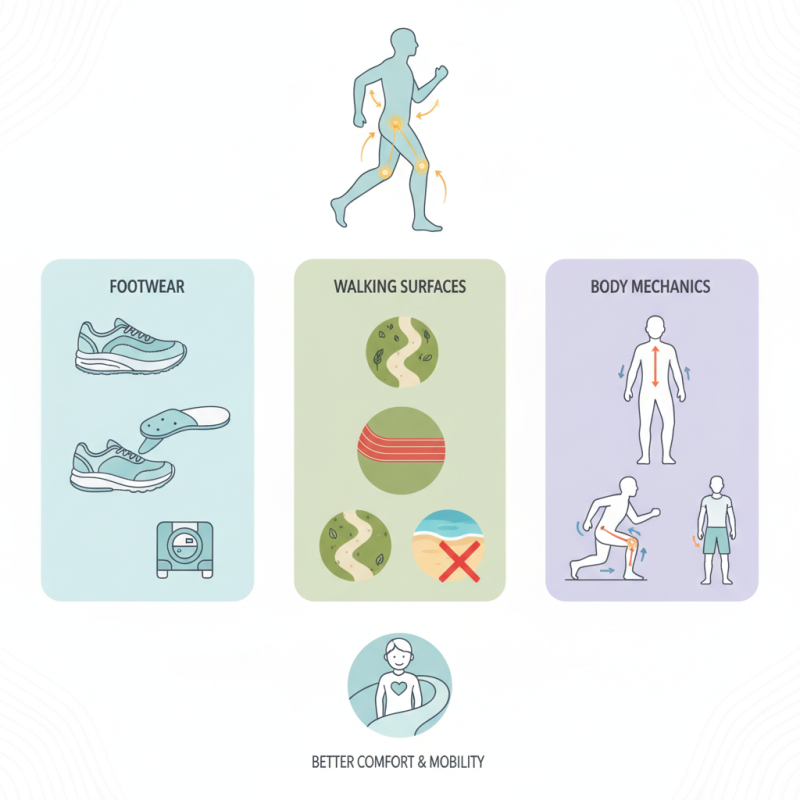
Walking is a fundamental activity for many people, but it can also put a strain on joints. Understanding how to reduce pressure on joints while walking is essential for enhancing comfort and mobility. Joints bear the weight of our bodies, and excessive pressure can lead to pain or injury. When walking, various factors come into play, such as footwear, walking surfaces, and body mechanics.
Many individuals ignore the signals their bodies send. Ignoring discomfort may lead to long-term issues that could have been avoided. Simple adjustments can make a significant difference. For example, choosing the right shoes can offer necessary support and cushioning. Additionally, being mindful of walking posture can alleviate undue strain.
It's crucial to recognize that everyone's experience varies. What works for one person may not work for another. Therefore, exploring different strategies is vital. Consistently evaluating how we walk can lead to improved joint health and a more enjoyable experience. Taking the time to learn how to reduce pressure on joints while walking will ultimately enhance one’s overall quality of life.
Understanding Joint Pressure: Key Factors Affecting Comfort While Walking
Walking is a fundamental activity that many take for granted. Yet, understanding joint pressure can significantly enhance your comfort. Joint pressure varies based on several factors. Your weight, walking speed, and terrain all play crucial roles. Carrying excess weight increases the stress on knee joints. Additionally, uneven surfaces can exacerbate discomfort, leading to potential injury over time.
Tips: To combat joint pressure, consider incorporating a few simple practices. Start with a warm-up routine to prepare your joints. Stretching helps improve flexibility and reduce stiffness. Wearing supportive shoes can also minimize joint impact. Look for shoes designed to absorb shock.
Your walking technique matters too. Maintain an upright posture. This helps distribute your weight evenly across joints. Pay attention to your stride; a shorter stride can reduce the impact on hips and knees. Taking breaks during long walks can provide relief and maintain endurance.
It's essential to listen to your body. If pain arises, evaluate your techniques. Sometimes adjustments are necessary. Reflect on your walking habits; small changes can make a significant difference in comfort and overall joint health.
Anatomy of Joint Stress: Common Causes of Discomfort During Ambulation
Walking is a fundamental activity, but it can put significant stress on your joints. Understanding the anatomy of joint stress is vital for improving comfort. Common causes of discomfort during ambulation include improper footwear, excessive weight, and poor walking posture. Ill-fitting shoes can lead to misalignment. Excess weight adds strain, while a hunched posture can compress joints.
To reduce joint pressure while walking, consider your footwear carefully. Shoes should provide support and cushioning. A good fit helps maintain proper alignment. This small adjustment can yield significant relief. Don't underestimate the power of walking surfaces as well. Soft surfaces, like grass or tracks, reduce impact on joints compared to concrete.
Incorporating stretching and strengthening exercises also helps. Flexibility reduces tightness, and strength training builds support around joints. A mindful approach to walking can elevate comfort levels remarkably. Reflect on your usual walking habits. Are you rushing or careless in your movements? Taking time to focus can make every step more enjoyable.
Joint Pressure Reduction While Walking
Essential Techniques to Reduce Impact: Strategies for Enhanced Walking Comfort
Walking can be a challenge for many due to joint pressure. Understanding how to minimize this impact can enhance comfort and enjoyment. One effective strategy is to choose the right footwear.
Shoes with cushioned soles can absorb shock and reduce pressure on joints. Arch support is also vital. It helps to maintain proper alignment, easing the strain on knees and hips.
Another essential technique is adjusting your walking surface. Paved paths, grass, or rubber tracks are usually easier on the joints than concrete. If you find discomfort in your knees or hips, consider changing routes. Additionally, pay attention to your walking posture. Keep your back straight and shoulders relaxed. It may seem minor, but good posture distributes weight evenly, reducing strain.
Lastly, listen to your body. Joint discomfort is a signal to adjust your routine. Shorten your walking distance or take breaks. Progress at your own pace. Embrace these adjustments gradually. Walking should be enjoyable, not painful. Prioritizing comfort can lead to a more fulfilling walking experience.
The Role of Footwear: How Proper Shoes Mitigate Joint Pressure
Choosing the right footwear is essential for reducing joint pressure while walking. Proper shoes can influence how your body absorbs shock. Shoes with adequate cushioning help distribute pressure evenly, preventing strain on your knees and hips. Lightweight materials can also enhance comfort, making it easier to walk longer distances.
Footwear with good arch support aligns your foot properly. This alignment can significantly reduce stress on your joints. If a shoe is too tight or lacks flexibility, it can cause discomfort. Walking in improper shoes can lead to misalignment and pain over time. It’s worth investing time in finding the right pair.
Regularly assess your footwear for signs of wear and tear. Sometimes, the best shoe can fail you after months of use. Pay attention to how your feet feel after walking. Any discomfort signals a need for change. It’s a process of trial and error. Finding the perfect shoe may not happen overnight, but persistent effort can lead to better comfort and joint health.
Integrating Strength and Flexibility: Exercises for Joint Health and Pain Relief
Integrating strength and flexibility is crucial for maintaining joint health. Many people overlook these aspects when considering comfort while walking. Strength exercises can help stabilize the muscles around the joints, reducing the risk of injury. Simple movements like squats and leg lifts can build up essential strength. Aim for slow, controlled motions to avoid strain.
Flexibility is equally important. Stretching exercises improve the range of motion in your joints. Try gentle stretches in the morning or after walks. Focus on areas like the hips, knees, and ankles. Even a few minutes each day can make a difference.
Incorporating both strength and flexibility may feel challenging. It requires dedication and consistency. Sometimes, you might not see immediate results, and that's okay. Listen to your body. Adjust your routine as needed. Finding the right balance will take time, but the payoff is worth it. Your joints will thank you for it.
How to Reduce Joint Pressure While Walking for Better Comfort? - Integrating Strength and Flexibility: Exercises for Joint Health and Pain Relief
| Exercise |
Type |
Benefits |
Frequency |
| Walking |
Cardio |
Improves overall joint mobility |
Daily |
| Quadriceps Stretch |
Flexibility |
Enhances knee flexibility and reduces strain |
3 times a week |
| Hamstring Stretch |
Flexibility |
Reduces tightness in the back of the legs |
3 times a week |
| Heel Raises |
Strengthening |
Strengthens calf muscles and enhances stability |
2 times a week |
| Chair Yoga |
Flexibility |
Improves joint mobility and relaxation |
Weekly |
| Water Aerobics |
Cardio & Strength |
Minimizes joint pressure while enhancing fitness |
2-3 times a week |
Conclusion
Walking is a fundamental activity, but it can be uncomfortable for many due to joint pressure. Understanding the key factors affecting comfort while walking is crucial. Common causes of joint stress include improper biomechanics and insufficient strength. To alleviate discomfort, it’s essential to implement strategies that effectively reduce pressure on joints while walking. Techniques such as adjusting walking pace, maintaining proper posture, and using supportive aids can make a significant difference.
Proper footwear plays a vital role in joint comfort as it helps absorb impact and provides necessary support. Additionally, integrating strength and flexibility exercises into your routine can enhance joint health and provide pain relief. By focusing on these aspects, individuals can learn how to reduce pressure on joints while walking, ultimately leading to a more enjoyable and pain-free experience.

 Medivoxa Medical